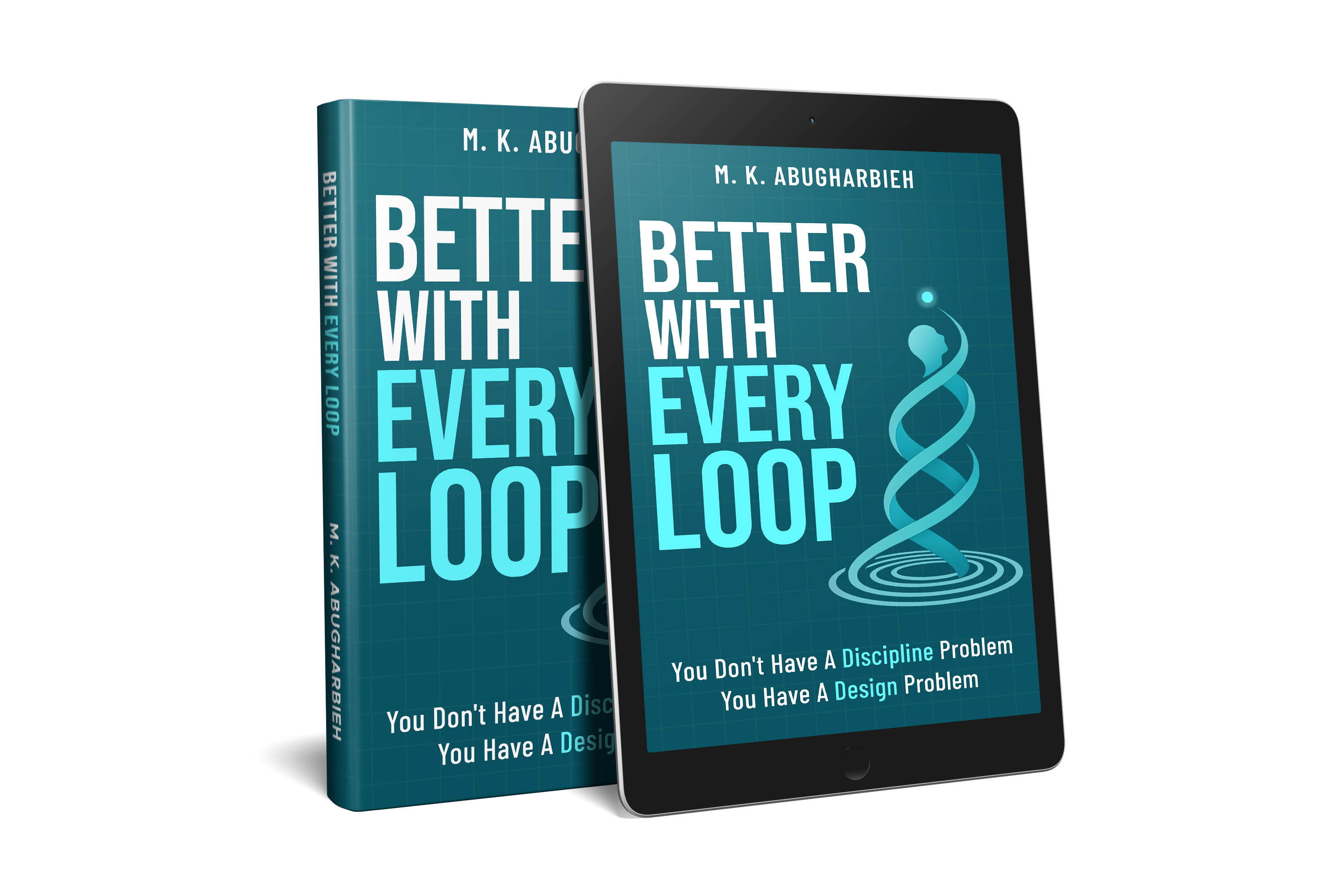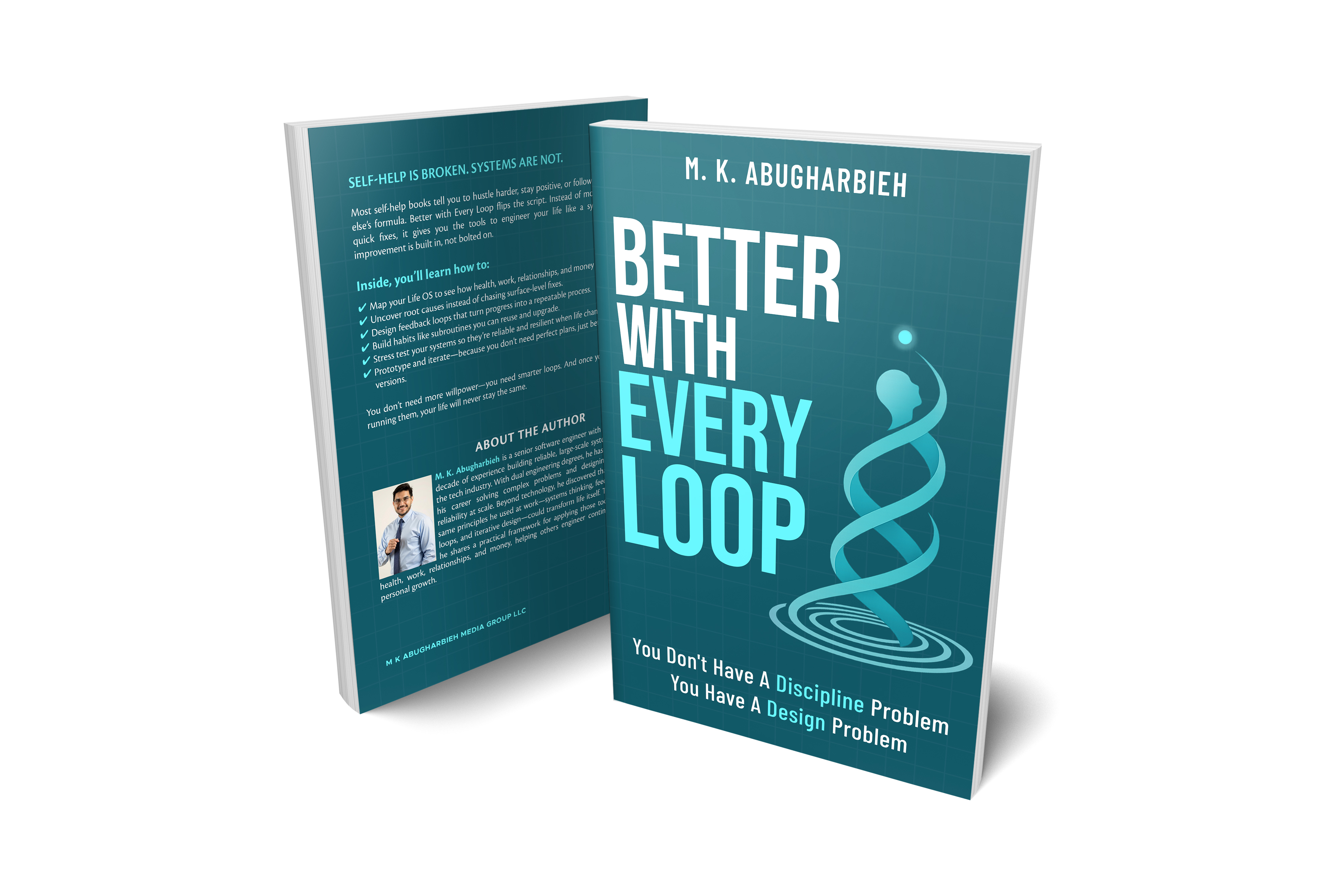
You Don't Have A Discipline Problem. You Have A Design Problem.
Better With Every Loop delivers a practical, engineer-inspired framework grounded in real tools from software development, project management, and behavioral science. This isn't theory. It's the exact process the author used to redesign his own life, documented so you can apply it to yours.
The book moves you through a complete engineering lifecycle: diagnosing your current system, designing a better one, running it deliberately, and improving it continuously.
You are already running loops: habits, routines, and patterns that produce the same outputs day after day. This chapter makes the invisible visible: the unconscious cycles shaping your health, work, relationships, and finances.
The shift from hoping for change to designing for it. This chapter introduces the engineering mindset, using root-cause analysis, the 5 Whys, and Fishbone diagrams to stop treating symptoms and start fixing systems.
Before you can design a better system, you need to define your requirements. Six clarifying questions help you move past vague goals and define what your life needs to actually produce.
How to design your Life OS across four domains (Health, Work, Relationships, and Money), understanding how they connect, where they create friction, and how to build interfaces between them that work.
Resilient systems have redundancy and buffers. This chapter shows you how to design a life that can absorb disruption (illness, loss, unexpected change) without collapsing entirely.
Inspired by the MVP in software development, the MVLS is the smallest version of your ideal life that you can actually run today. Start there. Iterate from there. Stop waiting for perfect conditions.
Apply the tools that ship software (work breakdown structures, sprints, and kanban boards) to your personal goals. Turn overwhelming ambitions into tracked, executable tasks.
Habit engineering at the structural level. Design the cue, routine, and reward, not from scratch, but by modifying the loop that's already running. Make the behavior you want easier than the one you're trying to replace.
You can't improve what you don't measure. This chapter shows you how to distinguish leading from lagging indicators and build a personal dashboard that tells you where you're going, not just where you've been.
Great systems don't just run. They get maintained. Daily check-ins, weekly reviews, monthly audits, and annual recalibrations keep your Life OS from degrading silently over time.
Track your changes, detect regressions, and roll back when something goes wrong. Journaling reimagined as a version control system: a structured log of what you changed, what happened, and what to do next.
Every system has operating limits. This chapter shows you how to define yours: the warning signals that tell you something is off before it becomes a crisis, and the pre-decided responses that keep you inside your design parameters.
A complete Life OS walkthrough using the author's own real example. Every tool from every chapter applied to a single real life, showing exactly how the framework works from diagnosis all the way to a running, improving system.
Read instantly on any device. Includes all charts, workbook exercises, and clickable references.
Buy on Amazon → Notify Me →The full physical experience. Perfect for annotating, dog-earing, and sharing with someone who needs it.
Buy Paperback → Notify Me →A premium keepsake edition. Give it as a gift or keep it front and center on your desk as a daily reminder.
Buy Hardcover → Notify Me →The audiobook edition is in production. Join the waitlist to be the first to know when it drops.
Connect with other readers, share your notes and reflections, and track your progress through the book on Goodreads.
Be the first to hear about new editions, companion materials, speaking events, and exclusive content for readers.
Coming soon